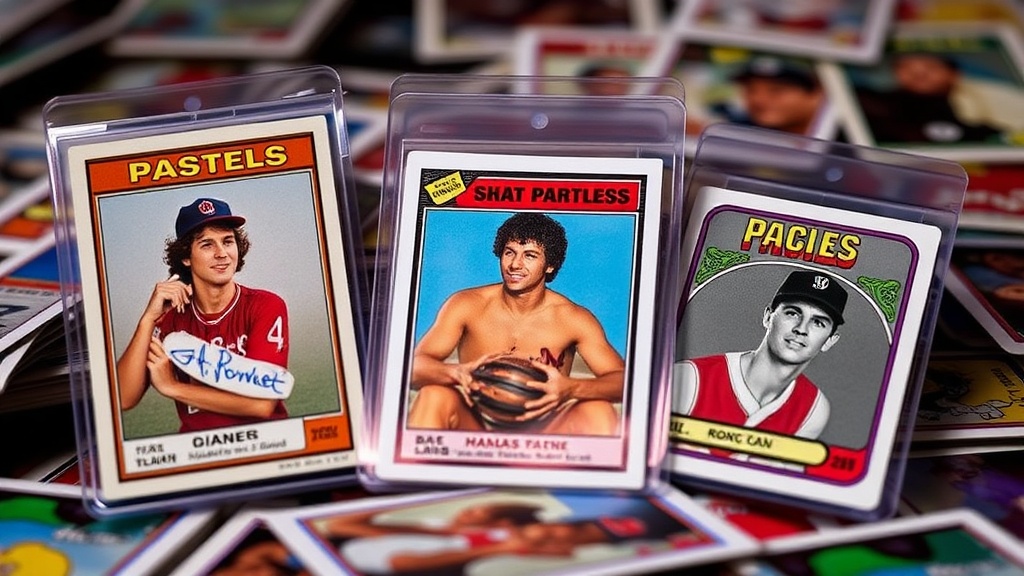
10 Most Valuable Trading Cards That Could Be Hiding in Your Collection

1952 Topps Mickey Mantle Rookie Card
1999 First Edition Shadowless Holographic Charizard
1909-11 T206 Honus Wagner Tobacco Card
1986-87 Fleer Michael Jordan Rookie Card
2009 Bowman Chrome Mike Trout Superfractor Autograph
This post ranks ten trading cards that collectors often overlook sitting in basements, attics, and dusty binders—cards that regularly sell for hundreds, thousands, or even millions depending on condition. Whether inherited from a relative or picked up at a garage sale years ago, these pieces of cardboard (and yes, condition matters enormously) could represent significant financial windfalls. Here's the thing: the trading card market has exploded since 2020, with vintage baseball cards and modern basketball rookies leading the charge.
What Trading Cards Are Worth the Most Money Today?
The most valuable trading cards span vintage baseball, modern basketball, hockey legends, and even Pokémon. Condition drives everything—a card worth $10 in poor condition might fetch $100,000 in gem mint. Here's a breakdown of ten cards that regularly command serious money at auction.
| Card | Sport/Category | Estimated Value (PSA 9/10) | What to Look For |
|---|---|---|---|
| 1952 Topps Mickey Mantle #311 | Baseball | $100,000 - $12.6M | High number series, color registration |
| 1986-87 Fleer Michael Jordan #57 | Basketball | $10,000 - $500,000+ | Sharp corners, centered image |
| 1999 Pokémon 1st Edition Charizard #4 | Pokémon | $20,000 - $400,000+ | Shadowless, thick stamp, no scratches |
| 1979-80 O-Pee-Chee Wayne Gretzky #18 | Hockey | $10,000 - $1M+ | Clean borders, OPC not Topps |
| 1909-11 T206 Honus Wagner | Baseball | $100,000 - $7M+ | Piedmont or Sweet Caporal backs |
1952 Topps Mickey Mantle #311
The 1952 Topps Mickey Mantle isn't actually Mantle's rookie card—he appeared in 1951 Bowman—but this is the card everyone wants. Here's the thing: Topps overproduced the high-number series (cards 311-407) and couldn't sell them to retailers late in the season. Allegedly, cases got dumped in the Hudson River. The scarcity made this card legendary.
Recent sales tell the story. A PSA 9 Mint copy sold for $5.2 million in 2021. The PSA 10 Gem Mint—a single card known as the "Gretzky T206 Wagner of baseball cards"—sold for $12.6 million in 2022 through Heritage Auctions. Worth noting: most Mantles found in attics are graded PSA 1 through 4, which still command $15,000 to $100,000 depending on eye appeal.
The catch? Reprints flood the market. Authentic cards have specific characteristics—the coloring on the Yankees logo, the placement of the "No. 311" on the back, and a distinct cardboard stock. If you've got one, don't touch the corners. Don't try to clean it. Get it to PSA or SGC immediately.
1986-87 Fleer Michael Jordan #57
Michael Jordan's Fleer rookie card anchors the modern basketball card boom. The 1986-87 Fleer set marked the return of NBA licensed cards after years of drought, and Jordan's image—soaring for a dunk against a red, white, and blue border—became iconic instantly.
Ungraded copies sell for $2,000 to $5,000 depending on eye appeal. PSA 9s routinely hit $20,000. The PSA 10 population is small—around 300 cards—and those command $150,000 to $500,000 at auction. The card has everything going for it: the greatest basketball player ever, a beautiful design, and notorious condition sensitivity. The red borders chip easily. Centering varies wildly.
Counterfeits exist. Real Jordan rookies have specific dot patterns in the Fleer logo, a distinct gum stain pattern on the back, and a cardboard texture that feels different from modern reprints. The 1986-87 Fleer set also includes rookie cards of Charles Barkley, Patrick Ewing, and Karl Malone—none approach Jordan's value, but they're worth checking for.
1999 Pokémon 1st Edition Charizard #4
If you were a kid in the late '90s, you knew the Charizard was the card. The 1st Edition stamp—found on the left side of the card near the illustration—makes the difference between a $100 card and a six-figure payday. That said, condition is absolutely critical with Pokémon cards.
PSA 10 Gem Mint 1st Edition Charizards have sold for over $400,000. Logan Paul famously purchased one for $150,000 in 2020, then saw similar cards explode in value. Even PSA 8s command $20,000 to $30,000. The "shadowless" variant—cards from early print runs where the illustration box lacks the drop shadow on the right side—adds another premium layer.
Check your binder. Look for the 1st Edition stamp. Check for scratches on the holographic foil—Charizards get "swirls" in the holo pattern that collectors love, but surface damage kills value. The card should feel substantial; fake Charizards often feel flimsy. CGC grades Pokémon cards alongside PSA and Beckett, giving collectors multiple authentication options.
How Can You Tell If Your Old Baseball Cards Are Worth Anything?
Start with the year. Cards from before 1980 generally hold value; cards from 1986 through the mid-1990s rarely do (the "junk wax" era). Look for Hall of Fame players, rookie cards marked with "RC" on modern cards, and any card featuring a player in their first professional uniform.
The 1989 Upper Deck Ken Griffey Jr. rookie card (#1) represents an exception to the junk wax rule. While millions were printed, high-grade copies still command $1,000 to $3,000. The card's significance—launching the premium card era with hologram backs and high-quality photography—keeps demand strong. Check for the hologram on the back; counterfeits often miss this detail.
Condition follows the "Four C's": corners, centering, color, and cleanliness. Use a jeweler's loupe or bright light. Look for creases—light bends in the cardboard that show as white lines when tilted. Check for surface scratches on glossy cards (common from 1990s Stadium Club and Finest sets). Centering should be roughly 55/45 or better for premium grades.
1909-11 T206 Honus Wagner
The Wagner card is the Mona Lisa of sports cards—impossibly rare, historically significant, and staggeringly valuable. Wagner's image appeared in cigarette packs distributed by the Piedmont and Sweet Caporal tobacco companies. Most surviving examples grade PSA 1 or 2; even these "poor" condition cards sell for $100,000 to $500,000.
You're not finding a Wagner in your attic. Probably. But Wagner did appear in multiple tobacco sets, including the E93 Standard Caramel and other regional issues. Lesser Wagner cards—still valuable, still worth authenticating—sometimes surface in inherited collections. The T206 design features white borders with a color lithograph portrait. Wagner's card shows him with a bat on his shoulder, looking slightly off-camera.
1979-80 O-Pee-Chee Wayne Gretzky #18
Wayne Gretzky's official rookie card came from O-Pee-Chee, the Canadian confectionery company—not Topps, the American equivalent. The OPC version commands significantly more money due to smaller print runs and notoriously poor centering. Gretzky's face often drifts toward the top border; well-centered examples trade at enormous premiums.
A PSA 8 copy sold for $465,000 in 2022. PSA 9s and 10s are nearly mythical. Even raw (ungraded) examples in apparent decent condition sell for $3,000 to $8,000. The card features Gretzky in his Edmonton Oilers uniform, photographed against a blue and orange background. Worth noting: the OPC card feels different from Topps—slightly thicker stock, different gloss pattern, and rough-cut edges from the factory cutting process.
The 1979-80 set also includes rookie cards of fellow Hall of Famers like Mark Messier and Mike Gartner. Neither approaches Gretzky's value, but authenticated high-grade copies still command four figures.
Magic: The Gathering—Black Lotus (Alpha/Beta)
The Black Lotus from Magic's earliest printings (Alpha and Beta sets, 1993) represents the holy grail of trading card games. The Alpha version—characterized by rounded corners and black borders—commands the highest prices. A gem mint Alpha Lotus sold for $540,000 in 2021 through PWCC Marketplace.
Beta Black Lotuses (white borders, sharper corners) regularly sell for $10,000 to $50,000 depending on condition. Unlimited edition Lotuses—still vintage, still valuable—trade for $5,000 to $15,000. The card's power in gameplay (zero mana cost, add three mana of any color) made it legendary; its scarcity made it investable.
Check old Magic collections carefully. The Power Nine—a group of nine absurdly powerful cards from early Magic—all carry value. The M:TG Wiki maintains detailed information about identifying print runs. Beta cards have a specific "beveled" copyright line that distinguishes them from Unlimited.
Modern Cards to Watch: Luka Dončić and Shohei Ohtani
The trading card market hasn't stopped producing valuable rookies. Luka Dončić's 2018-19 Panini Prizm Silver rookie card—featuring a reflective silver prizm finish—regularly sells for $1,000 to $10,000 depending on grade. The base Prizm rookie (non-silver) commands $200 to $800 in PSA 10. Serial-numbered parallels—cards with limited print runs of 25, 10, or even 1—can reach five or six figures.
Shohei Ohtani's 2018 Bowman Chrome rookie cards (both the standard and the "Prospects" variation) dominate baseball's modern market. The orange refractor /25 parallel sold for $45,000 in 2023. Even base Chrome rookies in PSA 10 command $300 to $600.
The key with modern cards: buy the card, not the grade—or in this case, find the card before grading. Raw modern rookies often sell for 30-50% less than their PSA 10 counterparts, creating opportunities for collectors who spot gems. That said, modern cards are printed on glossy stock that scratches easily. Check for surface flaws under direct light.
Error Cards and Variations That Hide in Plain Sight
Sometimes the valuable card isn't the obvious one. Error cards—manufacturing mistakes that were corrected—create scarcity. The 1989 Fleer Billy Ripken "F*ck Face" card (yes, really—the knob of his bat contained an obscenity) commands $50 to $500 depending on which corrected version you find. The original uncensored version is the money card.
The 1990 Topps Frank Thomas "No Name on Front" variation—caused by a printing plate error—regularly sells for $1,000 to $5,000. Normal Thomas rookies from the same set? Maybe $5. The 1982 Topps Cal Ripken Jr. rookie exists in multiple variations, with the "Future Stars" banner placement affecting value.
Look closely at your cards. Compare them against online images. Variations often hide in tiny details—missing text, different colored backs, corrected spelling errors. The T206 set includes multiple pose variations and back advertisements (Piedmont, Sweet Caporal, Polar Bear, Cycle) that dramatically affect desirability.
Where Should You Sell Valuable Trading Cards?
Once authenticated, options abound. Heritage Auctions dominates high-end sports cards, regularly selling million-dollar pieces. Goldin Auctions specializes in sports memorabilia and cards, with strong modern card results. eBay works for cards under $10,000, though fees cut into profits. Facebook groups and Discord servers host active collector communities where private sales happen daily.
Consider consignment for expensive pieces. Auction houses handle photography, authentication, marketing, and payment processing. They take 10-20% in fees, but the exposure to serious collectors often produces higher final prices than individual sellers achieve. For local sales, card shops offer immediate cash—but expect 50-70% of market value. They're running a business.
The market waits for no one. Cards that sat in binders for decades now trade like stocks. Check your collection. Check your relatives' collections (with permission, obviously). That childhood hobby might fund a down payment—or just a very nice dinner. Either way, you'll never know until you look.