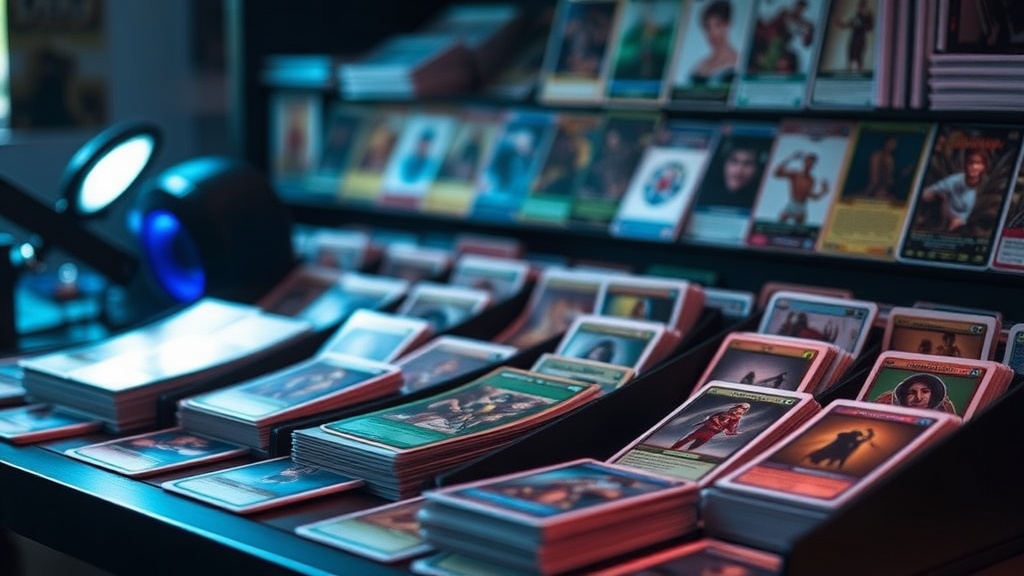
How to Organize Your Trading Card Collection for Easy Access

Do you ever find yourself digging through a messy pile of loose cards just to find one specific holographic foil? Organizing a collection can feel like a daunting task when you've spent years accumulating hundreds or even thousands of individual pieces. This guide covers the most efficient methods for categorizing, storing, and arranging your trading cards so you can actually enjoy them instead of just managing the clutter.
A well-organized collection serves two purposes: it makes finding a specific card instant, and it helps you spot gaps in your sets. Whether you're a Pokémon enthusiast, a Magic: The Gathering veteran, or a sports card collector, your storage strategy dictates how much time you spend actually looking at your cards versus looking for them.
What is the best way to sort trading cards?
Sorting is the first step in moving from a pile of cards to a curated collection. Most collectors find success by choosing a primary sorting method that fits their specific goal. If you are a completionist, you'll likely want to sort by set and number. If you're a player, you'll want to sort by card type or color. Here are a few common approaches:
- Set-Based Sorting: This is the gold standard for collectors. You group every card from a specific expansion together. It helps you see exactly which cards you're missing to complete a set.
- Rarity-Based Sorting: This is great for those who want to separate their "hits" from their "bulk." You might keep your common cards in cheap binders and your ultra-rares in premium sleeves.
- Function-Based Sorting: If you play a TCG like Magic or Yu-Gi-Oh!, you'll want to group cards by their utility—decks, sideboard, or single card libraries.
Don't feel pressured to do everything at once. Start with one small box or one specific set. It's better to have one perfectly organized binder than five half-finished ones sitting on a shelf.
Should I use binders or top loaders for storage?
This is a debate that happens in every hobby shop, and the truth is that both serve very different functions. You shouldn't try to make one do the work of the other. A binder is a display tool; a top loader is a protection tool.
Binders are fantastic for viewing your collection. They allow you to flip through pages and see the progression of a set. However, binders can sometimes put pressure on the edges of a card if they are too thick. Top loaders (rigid plastic holders) are meant for high-value cards or cards you intend to sell. They provide a hard shell that prevents bending and impact damage. If you're looking for the absolute highest level of protection, you might even look into magnetic one-touch holders for your most precious items. You can find detailed grading standards and protection advice through resources like the PSA website to understand why rigidity matters so much.
| Storage Type | Best For | Pros | Cons |
|---|---|---|---|
| Standard Binder | Viewing sets, casual collections | Easy to flip through, space efficient | Can cause pressure/warping if overstuffed |
| Top Loader | High-value cards, shipping | Excellent physical protection | Takes up much more storage space |
| Card Sleeves | Bulk-sorting, active play | Cheap, keeps cards clean | No structural protection against bending |
A good middle ground is the "double-sleeving" method. You place the card in a soft inner sleeve (penny sleeve), then place that inside a top loader or a specialized side-loading binder page. This adds a layer of defense against dust and moisture.
How do I keep my cards from getting damaged in storage?
Even with the best sorting system, environmental factors can ruin a collection if you aren't careful. Humidity is the silent killer of trading cards. Too much moisture leads to curling or "warping," where the card loses its flat shape. Too little moisture can sometimes make the card stock brittle.
To keep your cards in top shape, follow these rules:
- Avoid Sunlight: UV rays are brutal on ink. If you display your binders or top loaders on a shelf, make sure they aren't in direct sunlight. A faded card is a devalued card.
- Control the Air: If you live in a high-humidity area, consider using silica gel packets in your storage bins. These little packets absorb moisture and keep the air inside the container dry.
- Mind the Temperature: Drastic changes in temperature cause the card stock to expand and contract. This can lead to edge wear or even surface damage. Keep your collection in a climate-controlled room—not a hot attic or a damp basement.
If you're ever unsure about the longevity of a specific storage material, check the manufacturer's specs. For example, looking at the TCGplayer marketplace can give you an idea of how certain types of packaging or grading-ready holders are viewed in the secondary market.
Ultimately, organization is a personal preference. There is no single "correct" way to do it, but having a system in place means you'll spend less time searching and more time enjoying what you've built. Whether you're a minimalist or a heavy-duty collector, start small, be consistent, and always prioritize the physical safety of the cards themselves.