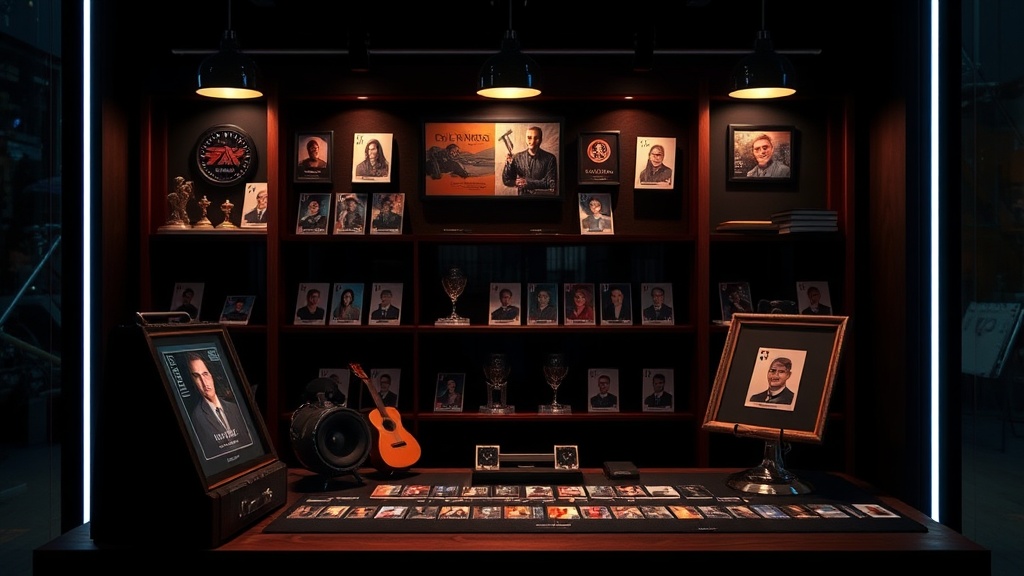
Setting Up a Professional Grade Card Display

A single high-grade Pokémon Charizard rests inside a thick, UV-protected slab, catching the light from a nearby window. The holographic foil glimmers against a matte black background, making the card look less like a piece of cardboard and more like a museum piece. This level of presentation isn't just about vanity—it's about preservation and perceived value. If you've spent years building a collection, you shouldn't leave your most valuable assets sitting in a cardboard-box bin or a dusty shelf. This guide breaks down how to build a professional-grade display system that protects your investment while making your collection look incredible.
What is the Best Way to Display Trading Cards?
The best way to display trading cards is through a combination of UV-protected acrylic holders and specialized LED lighting that avoids heat buildup. You want to move away from "storage" and toward "presentation." This means choosing items that serve two purposes: showing off the art and shielding the card from the elements.
Most collectors start with basic top loaders, but those are for protection during transit, not for long-term display. For a professional look, you need to graduate to rigid-walled cases or magnetic one-touch holders. If you're displaying graded cards—the kind from PSA or Beckett—you'll want something that accommodates the specific thickness of the slab. A standard one-touch holder won't fit a thicked-out graded card, so measure your slabs before you buy anything.
Here are the three main tiers of display options:
- The Entry Level: Plastic standees or basic acrylic holders for single, ungraded cards.
- The Intermediate Level: Magnetic one-touch holders (like those from Ultra Pro) for high-end single cards.
- The Pro Level: Custom-built acrylic shelving or high-end LED-lit display cases designed for graded slabs.
Don't forget about the "vibe" of the room. A collection looks much more expensive when it's organized by color, set, or rarity rather than just being a random pile of cards. It's a small detail, but it makes a massive difference in how your collection is perceived by guests (and potential buyers).
How Do I Prevent Card Damage from Light and Humidity?
Preventing damage requires using UV-resistant materials and maintaining a controlled environment with low humidity and stable temperatures.
If your display is near a window, you're asking for trouble. Even with UV-protected acrylic, direct sunlight will eventually win the fight. If you want to show off your collection in a bright room, use museum-grade glass or acrylic that specifically mentions UV filtration. It's a bit more expensive, but it's better than watching your $500 rookie card fade into a ghost of its former self.
Humidity is the second big threat. High humidity leads to "warping," where the card becomes bowed or wavy. This is a nightmare for graded cards, as a warped card can actually crack the internal seal of a slab over time. Keep your display in a climate-controlled room. If you live in a damp area, a small dehumidifier in the room is a smart move. It’s much cheaper than replacing a damaged collection.
I've seen people try to use cheap LED strips to light up their shelves, and while they look great, they can actually be a problem. Heat is the enemy. If your LED strip gets hot to the touch, it's too close to your cards. Use "cool" LEDs that stay at room temperature to avoid any thermal issues.
When you're dealing with high-value items, you should also consider archival quality materials. This means looking for acid-free and lignin-free components. Most high-end display cases will be labeled this way. If a product doesn't explicitly state it's acid-free, I'd steer clear.
| Display Type | Protection Level | Visual Impact | Best For |
|---|---|---|---|
| Top Loaders | Moderate | Low | Daily use/Trading |
| Magnetic One-Touches | High | High | Ungraded high-end singles |
| Graded Slab Displays | Maximum | Very High | PSA/BGS/SGC Graded Cards |
| Acrylic Wall Mounts | High | Professional | Wall-mounted collections |
How Much Does a Professional Display Setup Cost?
A professional-grade setup can cost anywhere from $50 for a single high-end holder to several thousand dollars for a custom-built, lighted display cabinet. The cost depends entirely on whether you are buying individual pieces or a complete, integrated system.
If you're just starting out, don't feel pressured to buy a $500 display case immediately. You can build a very impressive-looking shelf using high-quality individual components. For example, buying a dozen Ultra Pro magnetic one-touches and a few high-quality acrylic stands will cost you less than $100, but it will still look a thousand times better than a box of cards.
However, if you want the "museum look," you'll need to look at dedicated display furniture. Brands like Shadowbox or even high-end shelving from IKEA (once customized) can work well. A serious collector with a large volume of graded slabs will likely need a custom-built acrylic shelving unit. This is where the real investment kicks in. A custom-built lighted shelf for 50+ graded cards can easily run into the hundreds or even thousands of dollars.
It's worth noting that your display is part of the card's story. If you're planning to sell your collection later, a well-maintained, professional display proves you've taken care of the items. It's not just a cost—it's an investment in the long-term value of your assets. If you haven't already, you might want to look into verifying the authenticity of your cards before you go through the trouble of displaying them. There's no point in building a beautiful shrine for a counterfeit card.
When choosing your gear, prioritize quality over quantity. I'd much rather see five cards in stunning, museum-grade cases than fifty cards in cheap, flimsy plastic. It creates a sense of curated excellence. It shows that you aren't just a person with a lot of cardboard—you're a collector with a vision.
One thing to watch out for: avoid "display" cases that are actually just cheap plastic bins with a clear lid. These often don't provide any real protection against dust or light. You want something with a weight to it—something that feels substantial. If the plastic feels thin and easily bendable, it's probably not going to protect your cards from the rigors of a changing environment.
If you're looking for a way to organize your display by value or rarity, try grouping your cards by their "tier." Put your most valuable, graded-slab-protected items at eye level. Use your mid-tier-one-touch cards as the surrounding "frame." This creates a visual hierarchy that draws the eye exactly where you want it to go. It's a classic museum technique, and it works perfectly for trading card collectors too.